
How to have fun on your first trip to China? A 5-20 day itinerary covering over 300 5A scenic spots and countless authentic delicacies!
Date Published
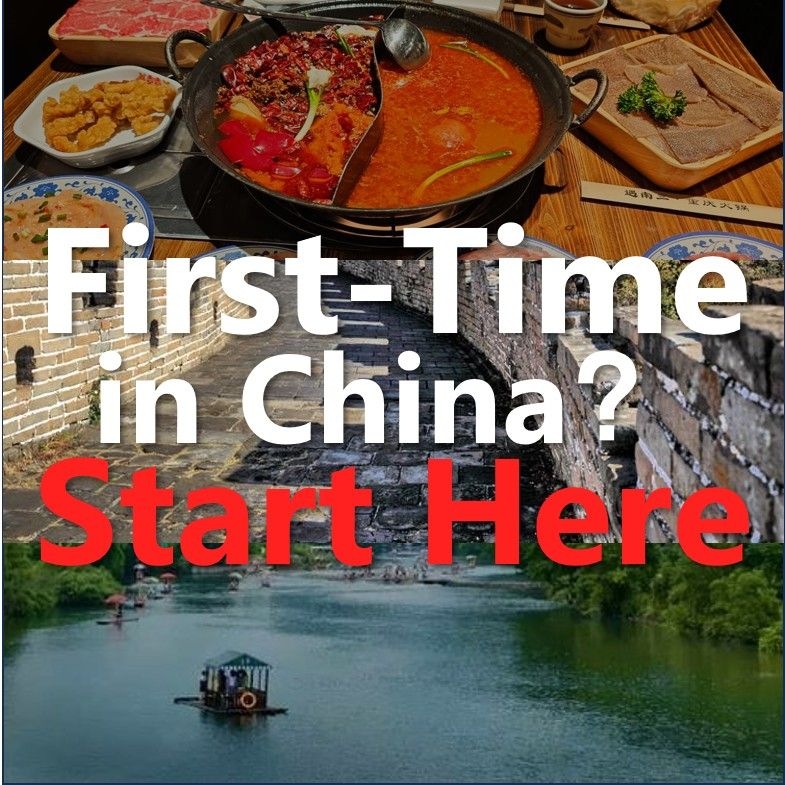
If you are hoping to visit China, first of all, congratulations, because this is bound to be a journey full of surprises and discoveries. Please make sure to read the following carefully; otherwise, you may fall into great confusion and miss many beautiful memories.
When traveling in China, the first thing to understand is just how vast it is—this land spans 5 time zones and has a land area of approximately 9.6 million square kilometers, which is larger than all of Europe. Here, you’ll find snow-covered northeastern forests, ancient towns with spring-like weather in Yunnan, and vibrant urban life in the bustling eastern cities, as well as the magnificent deserts of the west... This vastness has given rise to unimaginable richness: as of 2024, China has 56 World Natural and Cultural Heritage sites, over 300 5A scenic spots, covering nearly all types of landforms including mountains, lakes, ancient cities, and canyons, each worthy of 1-3 days of exploration. As for food, just the classic dishes in the eight major cuisines alone could take you months to taste, and the total number of unique dishes is difficult to quantify, conservatively estimated to be around 50,000 to 70,000 types.
Because of this, first-time visitors to China may initially find themselves experiencing a bit of “decision anxiety”—should you first touch the red walls and yellow tiles of the Forbidden City in Beijing or rush to Shanghai to experience the dazzling lights of the Bund? Concerned that a week may not be enough to see even a fraction of the world heritage sites; yet worried that a month’s itinerary may be too full, making the journey more exhausting than enjoyable? You might even wonder: once you arrive locally, which restaurant’s food is truly “local favorites” rather than “tourist traps”?
Don’t worry, this guide is tailored specifically for you as a first-time visitor to China. We understand that discovering such a “large and beautiful” country for the first time requires not a “wide range,” but rather “precision and efficiency”—to avoid unnecessary hustle and bustle while capturing the unique essence of each city. Here, we use the “number of days spent in China” as a measure, planning clear itineraries from a 5-day quick glance to a 20-day in-depth journey.
The following suggestions are simply to provide you with a rough itinerary; you can certainly adjust it according to your personal preferences——
5 Days—Deep dive in Beijing or Shanghai, quickly touch on China’s “classic postcards”
Given that 5 days isn’t very long, whether in Beijing or Shanghai, both are among China’s top giant cities, rich in countless tourist resources. Although transportation between them is convenient, it will take up at least one-tenth of your precious 5 days, so playing in-depth in one location is the optimal solution.
Beijing: 5 days
Spend four days visiting the Forbidden City, Great Wall, Summer Palace, and Temple of Heaven. In between, you can also explore the famous “Ghost Market” and the hutongs; the remaining day could be spent at Yonghe Temple and Prince Gong's Mansion to experience China’s unique “fu” culture. Of course, if you’re interested in Beijing’s stylish life, visiting THE BOX and Qiaofu Fangcaodi would also be excellent choices.
Note: absolutely do not attempt to go to the Great Wall in the morning and then head to the Forbidden City in the afternoon, or any similar arrangements. Such plans would mean spending over 200 kilometers in transit and walking over 30,000 steps in a single day. More importantly, it would make you feel like you have been everywhere but have explored nothing thoroughly, ultimately affecting your itinerary for the next day when your stamina is on the verge of collapse.
Shanghai + Suzhou: 5 days
In Shanghai, apart from the Bund, Jing’an Temple, City God Temple, and Yuyuan Garden, there are often lesser-known streets filled with charm and interesting shops that many overlook. However, if you ask anyone who knows Shanghai, they will tell you that true local flavors and charm are hidden in those areas; spend two days roaming, then head to China’s most romantic bar street for a drink in the evening, and you'll understand what “perfection” means.
Just half an hour away by high-speed train is Suzhou, a travel destination even more worthy than Shanghai—Humble Administrator's Garden, Lion Grove Garden, Suzhou Museum, Pingjiang Road, Xiyuan Temple, Tiger Hill... these places overflowing with the pinnacle of Eastern aesthetics are certainly worth a visit. And the local delicacies like Sanxia Mian, Shengjian Bao, and Cangshu Lamb... among hundreds of other foods will leave you wanting more... Spending three days exploring here will provide you with unforgettable memories for a lifetime.
10 Days—A rough understanding of the differences between North and South
Beijing: 6 days
In addition to the “must-see” places mentioned earlier, you can add a day to savor “Imperial cuisine” and visit Beihai Park. Imperial cuisine is not only delicious but also accompanied by a stunning grand performance, and the White Pagoda is indeed beautiful.
Shanghai + Suzhou: 6 days
Though just one extra day, this allows you more room to leisurely taste the flavors of both cities and gives you more time to enjoy more food.
Xi'an: 3 days
Beyond Beijing and Shanghai, Xi'an is absolutely a must-visit destination for every traveler coming to China. As a city with a history of 3,000 years and the capital of thirteen dynasties, every inch of its land is steeped in countless stories. You can see the Terracotta Warriors, Shaanxi History Museum, and many more historical “time capsules” full of the richness of history, and also enjoy original art forms like Qin Opera, Poem Recitation, Huayin Laoqiang, and Shaanxi storytelling infused with rocking rhythms.
As for food, lamb noodle soup, biangbiang noodles, and roujiamo are just the basics; while water basin lamb, jiaozi banquet, and gourd chicken truly reflect local gastronomy. There’s also biking on the ancient city wall, rock concerts in the city gate areas, and grand performances regarding the Terracotta Warriors... Xi'an will astonish you just as much as Beijing.
15 Days—Deeper unlock and more diverse experiences
Beijing + Datong: 7-8 days
Having seen the previous content, you must already know Beijing well, but why do I recommend you head to Datong? This lesser-known city is only a 2-hour high-speed train ride from Beijing, once the heart of Northern dynasties 1500 years ago, and one of China’s nine ancient capitals. It is a “sanctuary” of Buddhism’s eastward transmission, filled with historical wonders such as Yungang Grottoes, Hanging Monastery, and Yingxian Wooden Pagoda.
As for food, Shanxi’s shao mai, dao xiao mian, lamb offal noodles, and liangfen will give your taste buds a delightful shock. Oh, and if you have more adventurous spirit, there’s also aged vinegar cola and ice cream.
Chengdu + Chongqing: 7-8 days
Hometown of pandas, Chengdu is a relaxed city full of the “YOLO” spirit. Since ancient times, this has been known as the Land of Abundance, meaning it is beautiful like a paradise on earth. With a rich and stunning history, it adds a flavor of nostalgia and avant-garde to Chengdu’s fashion and trends.
After experiencing the urban prosperity, you can also head to Dujiangyan to witness this ancient hydraulic miracle, still in operation today, and get close to the pandas. You can also climb Qingcheng Mountain, delving into this living, breathing emerald maze, understanding the unique charm of Chinese Taoism. If you have more time, within half an hour’s ride by high-speed train, you can explore the Leshan Giant Buddha and Sanxingdui, as well as world-famous delicacies like Sichuan hotpot, Qiaojiao beef, twice-cooked pork, and grilled fish.
Spending 4-5 days to experience this place is a very wise choice.
And just one hour via high-speed train from here, Chongqing is even spicier. This city of magical realism built on countless cliffs, with attractions like Hongyadong, Liziba, and Kuixing Tower... all these wonders stem from this immigrant city’s intrinsic courage to not bow to life, as well as the wisdom to create fairy-tale-like livelihoods on the precipices of life.
Here it’s easy to get lost and easy to be left with a burning mouth, but no one loves Chongqing any less for that; it’s quite magical, but that’s Chongqing—spending 2-3 days there will leave you with unforgettable impressions for a lifetime.
Zhangjiajie: 4 days
Zhangjiajie’s global fame comes from Cameron’s “Avatar,” but its beauty indeed holds up under worldwide scrutiny. Here, you will find 3,000 majestic peaks and 800 beautiful waters, recognized as a World Natural Heritage site and a Global Geopark. Additionally, it is home to the world’s longest glass bridge, the most beautiful canyon, and the highest elevator... certainly, this is also regarded as the most beautiful scenery by countless people.
Spend four days exploring the canyons, caves, peaks, and streams, while tasting Sanxia pot, rice noodles, bandit chicken, and braised pork. Plus, enjoy large performances and extreme sports... everything here won’t disappoint you; if you still feel like it’s not enough, the scenery of Fenghuang Ancient Town is also a great addition as the “dessert” to this feast called “Zhangjiajie.”
Xi'an: 3 days
As mentioned earlier, choosing Xi'an is never wrong, but if you prefer modern scenery, you might try Guangzhou + Shenzhen.
Guangzhou + Shenzhen: 3-4 days
Guangzhou is a city that has thrived for thousands of years, with the proportion of millionaires being 4.27 times the national average. Remarkably, this city doesn’t appear to be as materialistic as Wall Street or a financial district; rather, they value family, order, etiquette, heritage, health, and culture...
Notables to visit include the Chen Clan Ancestral Hall, Thirteen Huang Museum, Yongqingfang, and Beijing Road Pedestrian Street, all containing rich art and culture accumulated over 2,000 years.
This is also the birthplace of China's largest cuisine category—Cantonese cuisine, which includes over ten thousand culinary delights, and we can spend a whole day experiencing that.
Within an hour’s high-speed train ride from Guangzhou is Shenzhen, which offers an entirely different vibe. Everything here moves at a fast pace, especially Huaqiangbei, where you can discover phone cases costing just a few dollars, “famous watches” priced in the tens, or drones for several hundred... all kinds of electronic products from virtually all global brands can be found here.
As for food, you might try out the fast food and late-night snacks that these “time is money” folks enjoy, studying how they balance efficiency and enjoyment.
20 Days—Travel across China’s most distinctive historical and natural landscapes
Feel free to mix and match the above routes; of course, if you visit China in winter, you may also consider Fujian and Harbin, as both places are very worthwhile to visit around the Chinese New Year.
Additionally, pay attention to seasonal issues—spring and autumn are the best seasons for traveling in China, where southern cities won't be too hot and northern ones won't be too cold. Of course, many unique winter scenes exclusive to the north are quite beautiful, like ice sculptures, snow sculptures, and rime, along with hot pot, iron pot stews, and spas... so be sure to prepare well, as winter adventures can also be a very enjoyable experience.
Conclusion
Though I’ve mentioned all of this, it's only the most basic information. To reiterate, China is so vast; there are countless places to explore, and its culture, history, and art are incredibly profound. It cannot be summarized simply in words. So if you wish to travel around China, do not expect to see it all in one go; please take your time to experience its richness and beauty, and prefer to stroll leisurely rather than rushing and missing out.
Welcome to China, and I hope you have a great time here.